
Laparoscopic Gallbladder Removal in Tijuana: What to Expect, Costs, and Recovery
Gallbladder disease affects more than 20 million Americans, and cholecystectomy — surgical removal of the gallbladder — is one of the most commonly performed operations in the world. When performed laparoscopically by an experienced general surgeon, it is a safe, highly effective procedure with a short recovery and excellent long-term outcomes.
Dr. Carlos Navarrete performs laparoscopic cholecystectomy as part of his general surgery practice in Tijuana, offering patients from the United States a proven alternative to the high costs and long wait times they face at home. This guide covers everything you need to know: anatomy, symptoms, diagnosis, the procedure itself, recovery, costs, and what makes Tijuana a practical and medically sound choice.
Understanding Your Condition
What the Gallbladder Does — and Why It Fails
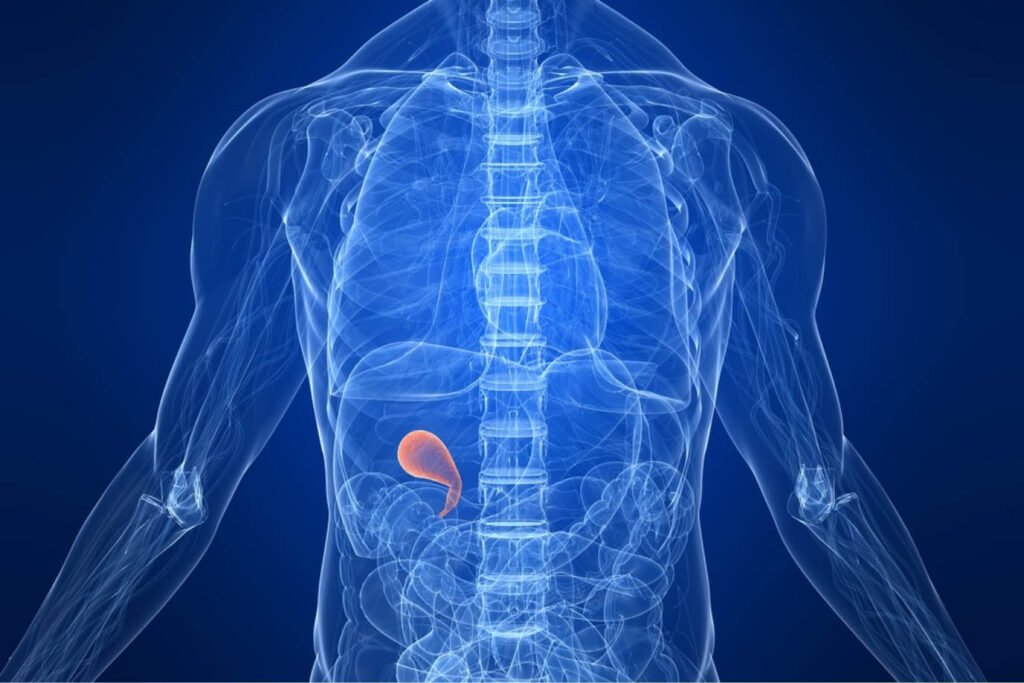
The gallbladder is a small, pear-shaped organ located beneath the liver on the right side of the abdomen. Its function is to store bile — the digestive fluid produced by the liver — and release it into the small intestine when needed to break down dietary fat. The gallbladder is useful but not essential; the liver continues to produce bile after removal, and it flows directly into the intestine without a storage reservoir.
Gallbladder disease almost always begins with the formation of gallstones — solid deposits of cholesterol, bile salts, or bilirubin that develop when bile becomes too concentrated or chemically imbalanced. The United States has one of the highest rates of gallstone disease in the world, with an estimated 1 million new cases diagnosed annually.
- Women — estrogen increases cholesterol in bile; risk doubles vs men
- Age 40+ — incidence increases significantly with age
- Obesity — overweight individuals produce more cholesterol in bile
- Rapid weight loss — including after bariatric surgery (see below)
- Pregnancy — hormonal changes slow gallbladder emptying
- Diabetes — associated with higher triglycerides in bile
- Family history — genetic predisposition to gallstones
- Certain medications — oral contraceptives, hormone therapy
- Cholelithiasis — gallstones present, may be asymptomatic
- Biliary colic — episodic pain when a stone temporarily blocks the cystic duct
- Acute cholecystitis — gallbladder wall inflammation, often with infection
- Chronic cholecystitis — repeated attacks causing scarring and thickening
- Choledocholithiasis — stone migrates into the common bile duct
- Cholangitis — infection of the bile duct; requires urgent treatment
- Gallbladder polyps — benign or potentially malignant growths
Recognizing the Problem
Symptoms and Diagnosis
Many gallstones are discovered incidentally during imaging for other reasons and cause no symptoms — these are called “silent” gallstones and typically require no treatment. Symptomatic gallstone disease, however, presents with a characteristic pattern that is often highly recognizable once you know what to look for.
The classic gallbladder attack
A gallbladder attack (biliary colic) occurs when a stone temporarily obstructs the cystic duct, typically 30–90 minutes after eating a fatty meal. The pain is visceral and intense — a deep, constant ache in the right upper abdomen or epigastrium that may radiate to the right shoulder or back. Attacks last 1–5 hours and resolve spontaneously when the stone dislodges. Nausea and vomiting are common during attacks.
- Severe right upper abdominal or epigastric pain — especially after fatty meals
- Pain radiating to the right shoulder or between the shoulder blades
- Nausea and vomiting during pain episodes
- Fever or chills with abdominal pain — suggests cholecystitis or cholangitis
- Jaundice (yellowing of skin or eyes) — suggests common bile duct obstruction
- Dark urine or pale, clay-colored stools — suggests bile duct blockage
- Bloating, gas, or intolerance to fatty foods chronically
- Severe abdominal pain that does not resolve after several hours
- Fever above 101°F with abdominal pain — possible acute cholecystitis or cholangitis
- Jaundice with pain and fever (Charcot’s triad) — medical emergency
- Rapid heart rate, confusion, or low blood pressure with abdominal symptoms
Diagnostic workup
Diagnosis is straightforward in most cases. The primary tool is abdominal ultrasound — inexpensive, painless, and highly accurate for detecting gallstones and gallbladder wall changes. Additional studies may be ordered depending on findings.
- 95%+ sensitivity for gallstones
- Evaluates gallbladder wall thickness
- Identifies pericholecystic fluid
- Assesses common bile duct diameter
- Painless, no radiation, quick
- Should be your first step with symptoms
- CBC — elevated WBC suggests infection or inflammation
- Liver enzymes (AST, ALT, ALP) — elevated if bile duct involved
- Bilirubin — elevated with duct obstruction
- Lipase/amylase — rules out pancreatitis
- Comprehensive metabolic panel
- CT scan — evaluates complications, rules out other diagnoses
- MRCP — best for common bile duct stones without radiation
- HIDA scan — assesses gallbladder function when ultrasound is normal
- Endoscopic ultrasound — for suspected small duct stones
The Operation
Laparoscopic Cholecystectomy: Step by Step
Laparoscopic cholecystectomy is the gold-standard treatment for symptomatic gallbladder disease. It has replaced open surgery as the standard of care — performed through 3–4 small incisions rather than a large abdominal opening — resulting in less pain, faster recovery, and better cosmetic outcomes without any compromise in safety or effectiveness.
Dr. Navarrete performs the procedure under general anesthesia in a fully equipped surgical facility. The entire operation typically takes 45–90 minutes for straightforward cases.
After Surgery
Recovery: What to Expect Week by Week
Laparoscopic cholecystectomy has one of the most rapid recoveries of any abdominal surgery. Most patients are surprised by how quickly they return to normal activities. The following timeline applies to uncomplicated elective cases.
- 1–2 hours in recovery room
- Pain rated 3–5/10 — well controlled with medication
- Shoulder or right-sided gas pain from CO2 is common and temporary
- Liquids tolerated — light meal by evening
- Walking encouraged same day
- Most patients discharged same day or after one night
- Soreness at incision sites — improves daily
- Fatigue is normal; rest as needed
- Regular diet as tolerated — start light, low-fat
- Short walks several times daily
- No driving while on narcotic pain medication
- Shower allowed after 24–48 hours; no submerging incisions
- Most patients return to desk work by day 7–10
- Physical or manual labor: week 3–4
- Light exercise resumes at week 2
- Normal diet fully resumed for most patients
- Driving resumes when off pain medication and comfortable
- Follow-up appointment with Dr. Navarrete (telemedicine)
Safety Profile
Risks and Complications
Laparoscopic cholecystectomy is one of the safest elective surgical procedures performed. In the hands of an experienced laparoscopic surgeon, serious complications are rare. Understanding the risk profile allows patients to make a fully informed decision.
- Wound infection at port sites
- Post-operative nausea and vomiting
- Shoulder and upper abdominal gas pain (CO2 — resolves in 24–48 hrs)
- Temporary loose stools or diarrhea
- Bruising around incision sites
- Urinary retention (temporary, especially with catheter use)
- Bile duct injury — most feared; 0.3–0.5% incidence in experienced hands
- Bile leak — from cystic duct stump or accessory duct; requires intervention
- Bleeding — from cystic artery or liver bed
- Retained stones — in common bile duct; managed endoscopically
- Hernia — at port sites, especially the umbilical site
- Deep vein thrombosis / pulmonary embolism — prevented with early ambulation
Cost Comparison
USA vs. Tijuana: What You’ll Actually Pay
Gallbladder surgery in the United States is expensive — often dramatically so — even for insured patients. Understanding the true cost on both sides of the border helps you make a financially sound decision without compromising on care.
“Gallbladder disease is one of the most straightforward surgical problems we treat — and laparoscopic cholecystectomy is one of the most reliable operations in all of general surgery. When it’s indicated, there is rarely a good reason to delay it.”
— Dr. Carlos Navarrete, Tijuana Bariatric ClinicBefore Your Surgery: Preparation Checklist
- Obtain and share your ultrasound report and images with Dr. Navarrete’s team
- Complete all required pre-operative blood work (can be done locally)
- Disclose all current medications — especially blood thinners and diabetes medications
- Stop NSAIDs (ibuprofen, aspirin) 1 week before surgery unless instructed otherwise
- Fast for 8 hours before surgery (nothing to eat or drink)
- Arrange a travel companion — required for discharge and recovery support
- Book round-trip flight to San Diego — arrive the day before surgery
- Plan for 1 extra night in Tijuana or San Diego post-surgery before flying home
- Arrange 1 week off work (desk job) or 3–4 weeks (physical work)
- Stock home with light, low-fat foods for recovery week
Related Articles
Experiencing Gallbladder Symptoms? Let’s Talk.
Schedule a consultation with Dr. Carlos Navarrete — a board-certified general and bariatric surgeon with extensive laparoscopic experience. Get a transparent quote and a clear path forward.
Schedule My ConsultationTelemedicine available · We respond within 24 hours · +1 (619) 735 2596 · info@drcarlosnavarrete.com
Frequently Asked Questions
Do I absolutely need surgery, or can gallstones be treated another way?
For symptomatic gallstone disease, surgery is the only definitive treatment. Medications to dissolve gallstones (ursodiol) work only for a specific subset of small cholesterol stones, take 12–24 months, have a high recurrence rate, and are rarely used today. Lithotripsy (shock wave treatment) is not standard practice for gallstones. Dietary changes can reduce the frequency of attacks but will not eliminate stones or prevent complications like acute cholecystitis or pancreatitis. Once you have a symptomatic attack, the risk of a serious complication is high enough that most surgeons recommend elective surgery rather than waiting for an emergency.
What happens to my digestion without a gallbladder?
The liver continues to produce bile at the same rate after cholecystectomy — the gallbladder’s only role was storage and concentration. Bile now flows continuously and directly into the small intestine rather than in concentrated bursts after meals. For most people, digestion is entirely normal within 4–6 weeks. A minority (5–10%) experience persistent loose stools with fatty meals — this is manageable with dietary adjustments and, if needed, medication. Long-term quality of life after cholecystectomy is equivalent to or better than before surgery for the vast majority of patients.
Can I fly home the same day or day after surgery?
Flying the same day as surgery is not recommended. Most patients are comfortable flying home 1–2 days after surgery for short-haul flights (under 4 hours). For longer flights, 2–3 days post-surgery is advisable. The main concerns are: ensuring you can walk normally to reduce DVT risk during the flight, managing pain without narcotic medications that impair alertness, and confirming no early signs of complications before leaving. Dr. Navarrete’s team will assess your readiness before you travel.
What if I also have stones in the common bile duct?
Stones in the common bile duct (choledocholithiasis) require treatment beyond cholecystectomy alone. The standard approach is ERCP (endoscopic retrograde cholangiopancreatography) — a non-surgical endoscopic procedure to remove duct stones — performed either before or after laparoscopic cholecystectomy. If common duct stones are suspected based on labs or imaging, Dr. Navarrete will address this in the pre-operative workup and coordinate appropriate management.
Is this procedure safe for patients who previously had bariatric surgery?
Yes, and it is actually more commonly needed in bariatric patients due to the elevated gallstone risk during rapid weight loss. The surgical approach is the same, though previous abdominal surgery creates adhesions that may add complexity. Dr. Navarrete has direct experience operating in post-bariatric anatomy and performs combined or staged procedures (bariatric surgery and cholecystectomy) when clinically appropriate. If you are a post-bariatric patient developing gallbladder symptoms, this is specifically within his area of expertise.
Will my U.S. insurance cover complications treated at home after surgery in Mexico?
U.S. insurance plans generally do not cover elective procedures performed abroad, but they do cover emergency treatment of complications in U.S. facilities regardless of where the original surgery was performed. If you develop a complication after returning home and require emergency room care or hospitalization, your insurance should cover that treatment. Dr. Navarrete provides all operative records, pathology reports, and discharge summaries in English for continuity of care with your U.S. physicians.